Oracle MySQL willl move to Ubuntu -style version numbers, with the next version being 26.7.
Although the blog post doesn't go as far as actually mentioning Mariadb, this seems to be a response, and great solution, to a request from the MySQL community.
During the discussions in Brussels in January, someone pointed out that in 2012 Mariadb jumped their version from 5.x to 10.0. This was done to help developers of tools like Monyog, HeidiSQL and continuent to know for sure whether they are talking to a Mariadb or MySQL server.
Heck, even Mariadb and MySQL themselves need to know what version is on the other side of a replication connection, or what version created the data files I'm trying to read/use.
All of this was at risk of breaking now that 15 years later, Oracle had released MySQL 9.7
So let's acknowledge the new MySQL leadership at Oracle for listening to the community! This solution leaves Mariadb with the range of version numbers from 14 to 25, which should last them another 40 years or so. At that point Monty will be over 100 years old.
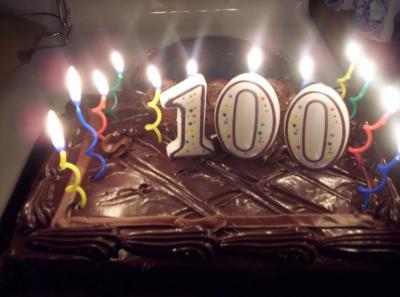
...I probably won't live long enough to see Mariadb 25.x. So I will give my unsolicited advice to Monty and the Mariadb community of 2062: at Monty's 100 year birthday, jump from Mariadb 24.7 to releasing Mariadb version 100.0 in honor of Monty's birthday.
That in turn will leave MySQL with the numbers 26 to 99.
It's a great question whether Larry will have retired in 2100, but I'm gonna assume no. So Larry if you're reading this: your solution is one you are already familiar with from the previous time we wrapped a century.
Use CHAR(4) to store years, CHAR(2) is ambiguous.
PS: Note that another reason why MySQL also cannot loop around and start from 1, 2, 3.. This would create problems for everyone still running MySQL 3.21 in production.